
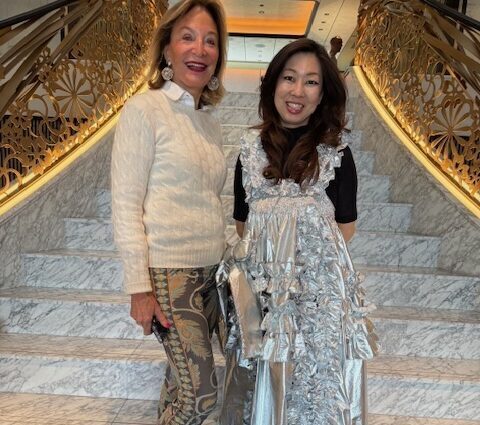
So many friends have been to Japan this past year and loved it – the food, art and culture and experiences. After having spent 16 days there I totally agree, but loved it for a deeper reason, the same reason India, Mexico, Iran and China are among my destinations of choice: the opportunity to experience a totally different culture and civilization. Unlike the other three destinations, it doesn’t reveal itself at first glance; one has to delve deep to appreciate its fascinating complexity, getting top guides to explain its political and economic history, culinary traditions, its fraught experience with nature, customs in family and social life. How to do this?What are some of the experiences to put on your list if you go, and travel tips for visiting Japan. Here’s Part 2, exploring Japan beyond Tokyo, click here.

First off , get a specialized travel agent and smart guides. We did this, choosing Marian Goldberg https://goldbergonjapan.com , who used to do PR for the Japan National Tourism Organization, and is now a Japan specialist affiliated with upscale Courtyard Travel .We were rewarded with one of the more memorable travel experiences of my long career in the travel industry.
General travel tips for visiting Japan:
Allow enough time if you’re going beyond Tokyo which you should do. As I mentioned, we stayed for two weeks and wish we would have stayed for three or four weeks. You need time to stop and explore the unexpected. For instance, on one tour with one of our several very knowledgeable guides, RamKy of www.JapanUnfiltered.net ,we went to the electric town, Akihabara.
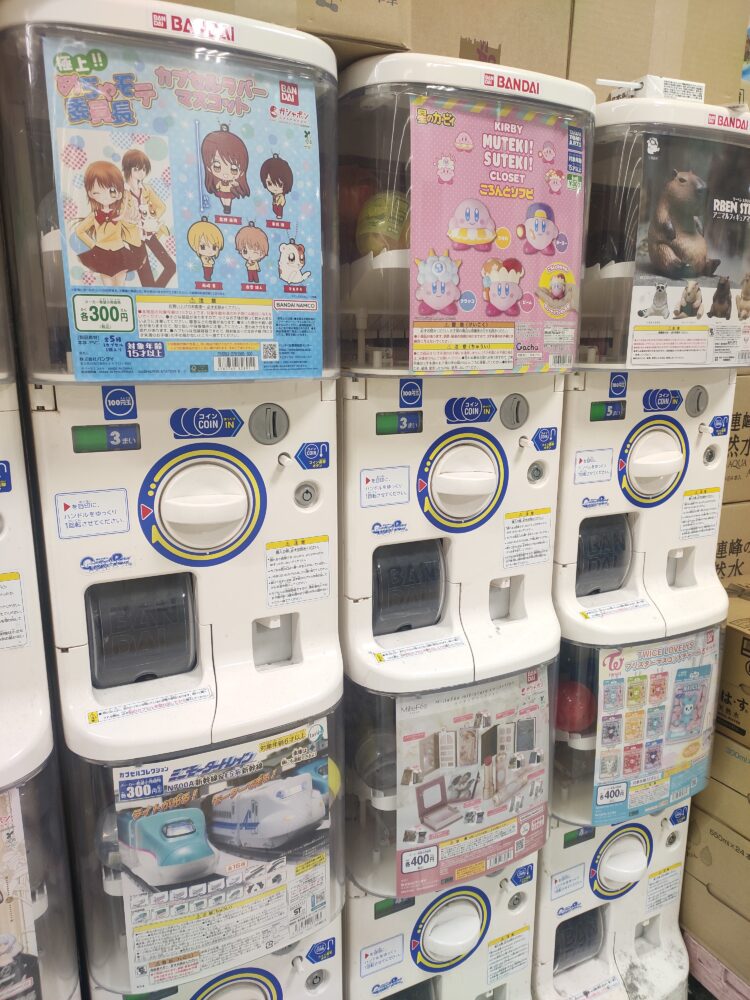
It’s known for its cutting edge amusements like Gachapon vending machines filled with all matter of miniatures in capsules to protect people from a harsh world . Within the capsules can be anything ranging from anime/manga figurines, emergency stop buttons of trains, to Godzilla minis that roar and many more.

On the way, I had heard about a certain hair oil Japanese women and men use for moisturizing and uber shiny hair, camellia oil, so we went to a drugstore to buy it (turns out it’s wonderful, makes your hair lustrous, bought three tubes). We could have spent an hour there, exploring all of the beauty products.

Or a visit to a 7-Eleven to change money (ATMs are only available there or at the post office), discovering the amazing world of sweet and savory snacks and quirky grab and go food items and finally, an electronics store with mini appliances for solos like a dishwasher that only holds enough dishes from one meal and a washing machine for one or two shirts.
In Tokyo with the world’s largest metropolitan population at 37 million, you should know there are 23 distinct districts. It took us a 20 to 30 minute taxi ride when there isn’t traffic to get from one place to another (Miami should take note of how taxis are run: they’re spotless, with even the drivers wearing white gloves and some a captain’s hat, and the doors are automatic). Even if you take the efficient, clean and state of the art trains, it still takes time; thus, my advice to leave time.

More travel tips on visiting Japan
If you want to eat in a leading restaurant be sure to reserve. Between all the visitors and the Japanese love of food, they fill up quickly (Some also have very limited seating. It’s not uncommon for restaurant to only have eight seats!) despite the fact that Tokyo has more restaurants than Paris and New York City combined. Many of the restaurants are small, and often specialize in a single food item – ramen, soba and udon, sushi, yakitori. We mostly ate in off-the-beaten-track spots, trying different cuisines as well as local. From Korean and Chinese to Indian and Thai, we ate very well and cheaply. Of course you can’t miss the steak restaurants with the highly marbled Kobe and Wagyu beef that are massaged, fanned, and relaxed with classical music.

People are very helpful and kind. That being said, not many speak English and those who do I often found difficult to understand, even in international hotels. Problem solver: google translate works wonders. One of my guides also recommended PocketTalk and DeepL.
See some films to give you an idea of the history and culture and some customs that are helpful to know about, Plus, they’re interesting and entertaining films besides. Particularly good were the Age of Samurai, Tokyo Vice, Midnight Diner, Perfect Day, Tokyo Salad Bowl, Shogun (old and new versions), Tampopo.

What to explore of course depends on your interests. That being said, don’t miss a foodie tour with Culinary Backstreets which I’ll be writing about in a separate post. You’ll also want to visit a Tokyo fish market with some fish and shellfish you’ve likely never seen, and have lunch there. A terrific guide we had from Arigato Travel https://arigatotravel.com/ was Yappy, who previously worked in Tsukiji market for a time, so can give a truly insider’s view of the market which was built on landfill! Popular culture is another ‘must do” as it exposes an alternate reality, the other side of the regimented Japanese society, important to understanding the country. RamKy is in on that.
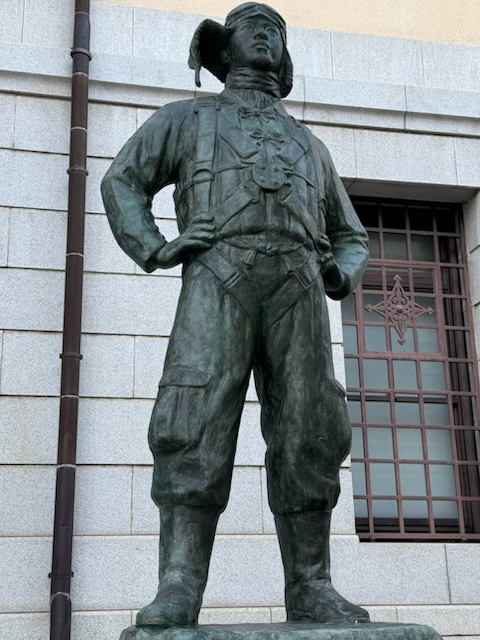
One of the places we visited was a shop selling figurines from anime including one that one man “married”, Miku, a virtual singing idol and Vocaloid character in a real wedding. If you want to see her and read about it, click here for the article about it in the New York Times. He also shared much more about the economic history of Japan and customs . Another aspect of Japan he discussed was the international trial for Japanese war crimes and the Yasukuni shrine which is adjacent to the war museum, a “must stop”.
We were surprised to learn that Japanese architects are considered among the best in the world, and in fact the country with the most Pritzker Architecture Prize winners is Japan with a total of eight laureates as of 2024. Marian set us up with a wonderful walking architecture tour we enjoyed with Tom Bader, an American architect and graduate of Yale who gives tours. Below are just a few of the striking buildings in the Omtesnado district, home of many international luxury brands. Photos by Tom.
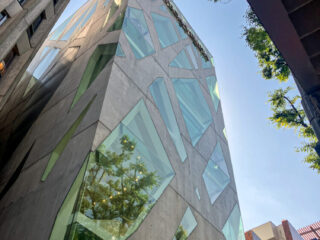
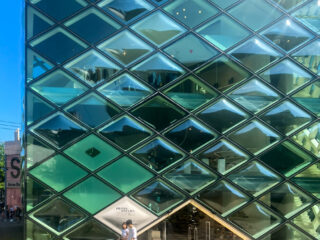
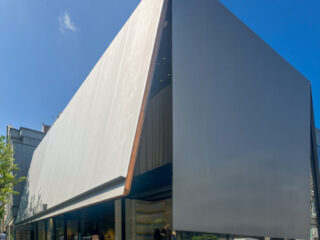
Japanese ceramics and basketry I’ve always admired, but only after going to Japan did I see how there’s a pervasive artistic sensibility and admiration for design, craftsmanship and art.You see it in everything from tickets which could be framed, and wrapping of even the simplest item to manhole covers! (There are 5500 museums in Japan!). It’s interesting how it’s such a contrast with the skyscrapers in Tokyo and Osaka with their impersonal international design.
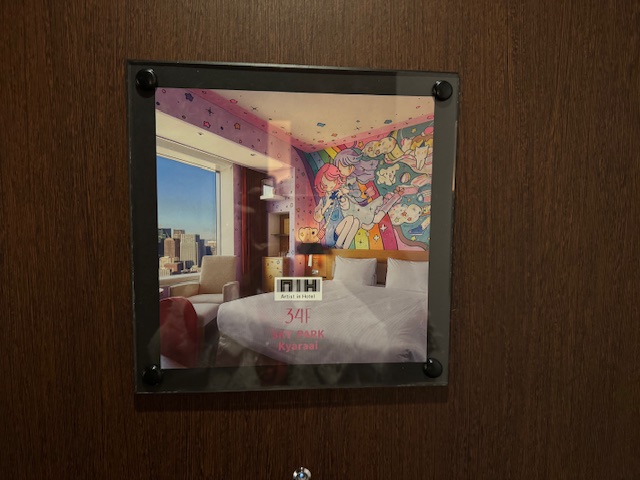
If you’re an art lover, a good place to stay is the Park Hotel: the Art Hotel. There’s original art (much of it for sale) everywhere from artists’ painted themed guest rooms and “corridor galleries,” exhibition spaces where guests pass on the way to their rooms looking at art as they might at an art museum, to seasonal shows in the lobby.

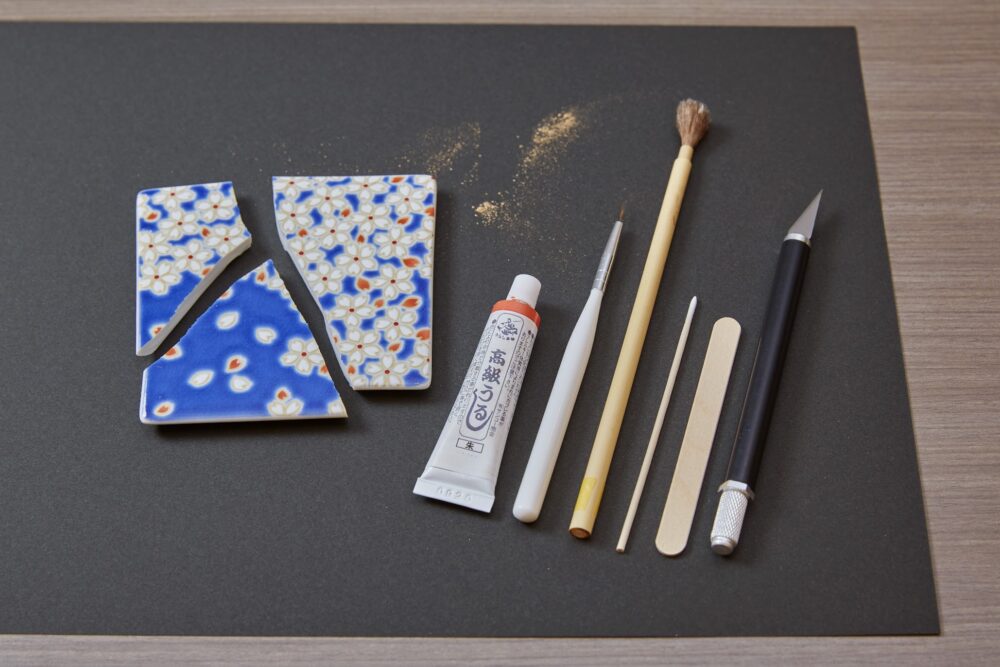
Its sister hotel the Shiba Park Hotel, has classes in Kintsugi, a Japanese art form of repairing broken pottery by mending the pieces with lacquer and gold (or silver) powder, often highlighting the cracks and imperfections as part of the design.
They also make a commitment to culture with their serious 1500-book library, with books on Japanese architecture, photography, and art not only in the lobby, but also in a small reading room on each floor, each with its own themed book collection. (I also loved the feature of the in-hotel laundromat with all-in-one washer/dryers.)

On an interesting side note, we were intrigued to see the affinity the Japanese have for French culture and food. There was a serious Monet exhibit in Kyoto at the Kyocera Museum of Art and both the exhibit and the shop were totally packed with mostly Japanese. We stayed at the Fauchon Hotel which is only the second one of the French group. Guest rooms have a dramatic pearly-pink, free-standing cabinet that is stocked with free savory and sweet snacks and Fauchon tea that are complimentary, and there’s an afternoon tea service with Eastern and Western tea masters that are among the few in the world that are certified.

Many of the businesses – food, the arts, you name it, are run by families not only for decades but for several centuries.We were told that 75% of businesses in Japan are over a century old.This translates into a dedication to quality that is pervasive.
You’ll feel totally safe day and night. A Japanese friend said she even feels comfortable leaving her handbag on a chair for a few minutes and walking away. Another thing that has to impact you is that everything is so clean, no litter anywhere and public restrooms are immaculate.
Finally, and rounding out the travel tips and insights for visiting Japan — speaking of restrooms, I can’t leave the topic of Japan without talking about the toilets. At most places we went, even modest restaurants and museums, the toilets were top of the line Toto. In our hotels they had the ones whose lid was automatically raised when you walked in the door, flushed by itself and then the lid lowered automatically when you left the stall. In one hotel they had the premium model that also serves as a bidet. Mr. W said the next innovation will be AI where it welcomes you and strikes up a conversation perhaps?
For other city visits and highlights, stay tuned.









13 Responses
Loved it!
Sounds truly an amazing trip ! Thanks for this !
Thank you for taking time to visit us in Japan. And, sincere gratitude to Marian san for her thoughtful endorsement of my tour curation services.
~ RamKy
Japan unfiltered.net
And thank you for your terrific insights. Can’t wait to return.
Yes, Japan does seem to be on everyone’s post Covid list. We recently returned from a cruise which went to 9 or so ports. Limited mobility makes that ideal for us. But we also were able to do pre and post visits on our own to Naoshima and Tokyo.
Most disappointing: the Hiroshima Atomic Bomb museum is very poorly laid out with a bottleneck that crowds people together in a frightening manner. The tour of the park including the dome are outstanding. Nagasakis museum was much better with far less congestion and equally devastating exhibits.
Most fun: we lucked out and we’re there just as the cherry blossoms were about to peak. Tokyo was buzzing with everyone visiting the parks. We went to one park said to have 1000 trees. I think we saw 999!
We also spent time on Naoshima Island in the Inland Sea at the Benesse Hotel. Simple rooms, exquisite dining and multiple museums with stunning architecture and some wonderful pieces of art made this a highlight of our fabulous holiday.
Thanks for the tips. Actually, Naoshima which was written up by the New York Times last week for inaugurating yet another museum, and Hiroshima are on my “to visit” list for next time. Lucky you to have been there for the cherry blossoms. It must have been spectacular indeed!
Great blog !! Japan is so différent and this is the way to do it
Thank you for your priceless tips so important to really enjoy a trip
Thank you
Isidora
Thank you Karen! Going soon and hope to have an excellent experience too.
What a trip! Mr. W’s expressions were priceless. Wondering how many museums you visited? Did you & Mr. W dress up in kimonos for a photo? I really wish we could have such cleanliness, I’ll be in heaven. The hardest working people!
We didn’t visit as many museums as we would have liked as some on our “to do”list were closed. We were told it was to change exhibits.Next time. I didn’t dress up in a kimono though there were several places I could have done that.To do it right, it’s a time consuming thing as it’s not only the clothes but the hair and makeup. Yes, I agree about the cleanliness but even more so, the respect for one’s neighbor and the sense of community.
Thank you Karen for this incredible post. I wish I could stay long enough to visit all 5500 museums!
I guess we will have to plan several more visits,
Thank you for staying at Park Hotel Tokyo and Shiba Park Hotel! It was a pleasure meeting you, and we truly enjoyed having you with us. We look forward to welcoming you back to Japan in the future.
Lovely meeting you too. A return trip is in my plans for sure.