You saw instagrammable China, offbeat images from my recent trip to Shanghai, Sichuan Province and Wenzhou. Then, there was fashion spotting (click here in case you missed it), and now here’s a list of 10 quirky, fun facts and travel tips China:
- Proper Chinese etiquette dictates that it’s acceptable to slurp and spit out chicken bones on the tablecloth but a “no no” is blowing your nose in public (plus it’s now illegal), especially at mealtimes. If one gets the urge, it’s best to absent yourself from the room. It’s also considered bad manners in Malaysia and Japan.
- Wherever you go be sure to see the new hi-tech zones of the major cities. It’s part and parcel of understanding the power of China today and what happens when something becomes a government priority. As one of my writing colleagues said, the zones look like a business version of Las Vegas with futuristic buildings on steroids.
- China represents the number one country in visitors to the USA. This year is Sino-American tourism year and both governments have made a commitment to promote tourism between the two countries. To make it easier, both China and the US are giving visas good for multiple entry for 10 years. Bravo!
- The largest bill in Chinese currency is the 100 reminbi note which is the equivalent of about $15 USD in today’s exchange rate, so expect to carry a wad of cash. All the denominations of bills have Mao Tse Tung’s picture on them. There’s talk of larger bills, but then one guide told me, the political question is, whose image will appear (and everything is ultimately political)?
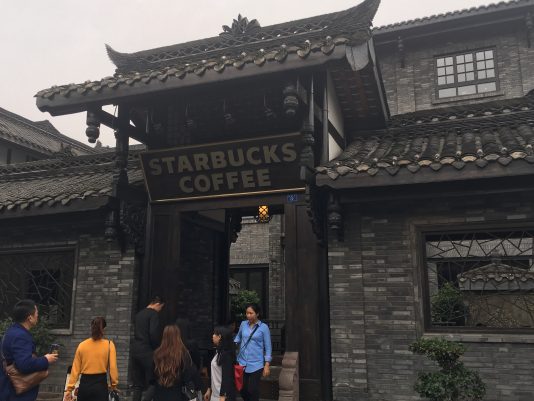
- US fast food chains are in slim evidence except for Starbucks, Burger King and perhaps KFC, and once in a while Subway or Pizza Hut. Shanghai has over 300 Starbucks and it’s seen as a status symbol to be carrying their branded cup. In fact, young professionals have been known to buy a cup of Starbucks and fill the cup with whatever afterwards, carrying it around for days to show it off.
- Even though you’ve read about it, one is not prepared for the sheer scale and numbers in China. On arriving in Wenzhou I asked the guide the population of the city. It’s a small city she said – 8 or 9 million residents.
- China has more than eight major languages and 3 minor minority languages besides many dialects and sometimes people in one region often don’t understand people from another area. To aid communication the government chose Mandarin as the official language in the 1900’s.
- In the quirky crafts category, Wenzhou, which bills itself as the “craft capital” of China, boasts hair embroidery. The artisans use strands of hair as they’d use silk, weaving it into elaborate artworks. In an interview, the artist said she likes to have foreigners hair since it’s different in color from Chinese hair color. Now how would this be for a new commercial enterprise? Tourists can leave off a few locks in the morning and get a custom artwork with their hair in the afternoon. Regrettably, colored or permed hair won’t work.
- If you want to see Chinese day to day life, go to a park. My take is that with all of the massive high rise living, small apartments, and an absence of green space around the buildings,people use the parks as living rooms and social spaces. So you find everything from couples dancing (fox trot, line dancing and more), and groups practicing tai chi to young people doing sports and the elderly taking it all in. Some parks charge a modest entrance fee.
- The city of Wenzhou’s urban plan was made by a famous Fengshui master, Guo Pu in the Jin Dynasty (265 – 420 AD). After inspecting local geographical conditions, he built the city on south bank as the soil on north bank was too soft; this also allowed houses facing south to get sunshine. In addition, he constructed sixty-four springs and five ponds to adjust the layout of the city. What’s more, its location of being surrounded by mountains has provided effective protection from wars over the centuries. Plus, ever since then, it has never suffered from typhoons or earthquakes. Now how about that for a solution for Miami?