
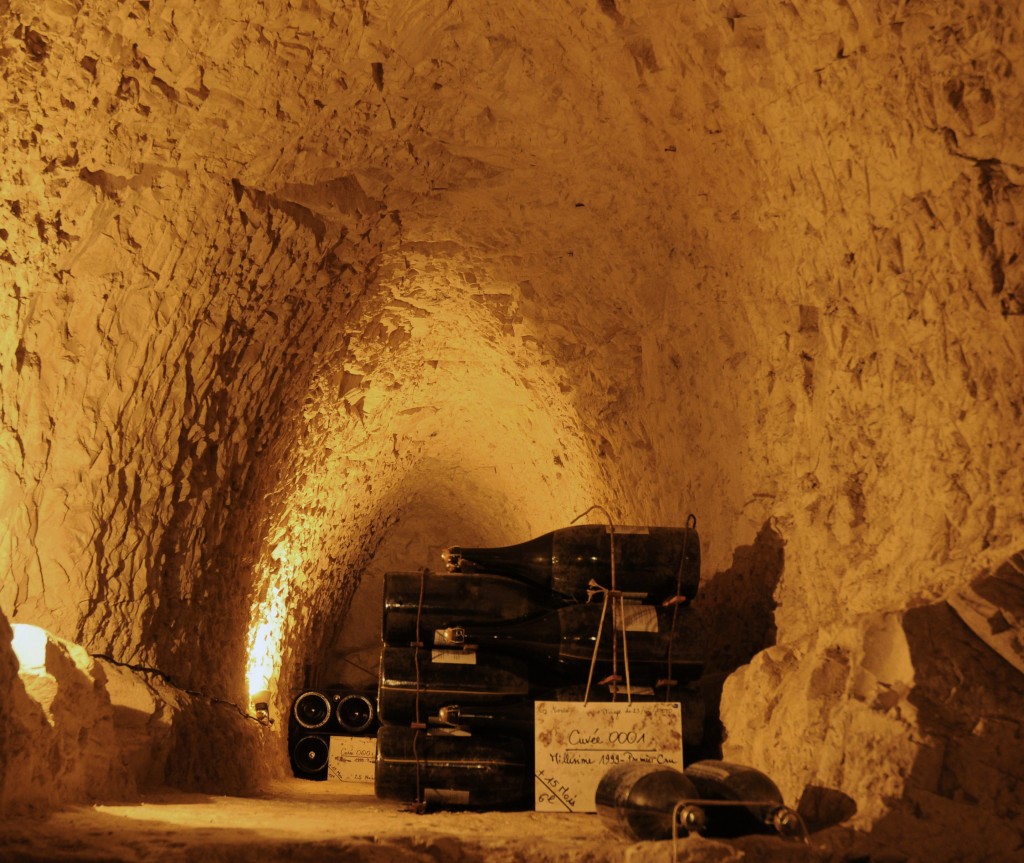
It seems that as the wine culture grows globally, with more aficionados than ever, and wines commanding ever higher prices, Champagne has taken a back seat to the growing sparkling wine Prosecco. I’ve taken wine classes in the past, and tastings proliferate, but I realized how little I know (and imagine with many others it’s the same) about champagne. So I took advantage of a conversation with Remi Vervier, Directeur of the prestigious Champagne Palmer & Co. at a lunch at Coya to sample their line to ask questions about the selecting, serving, and storing what started as a drink of royalty in the 17th century.
1.What makes a champagne great?
A great Champagne is always a combination of the expression of a terroir –nature of the soil, climate and exposure to the sun– and the know how of a Maison — a company that produces its own champagne with its own knowhow. For Palmer a great Champagne should absolutely be elegant, meaning that bubbles are thin and creamy, aromas are intense and fresh, and that the sensation in the mouth is long-lasting.
2.Do vintages matter and if so how? What are the best years?
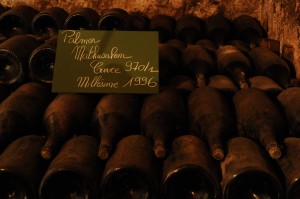
A vintage is always a sign of a great year. If mother nature gives us a fantastic crop, we will decide to elaborate a champagne with only the best still wines of this great year. Every year each house decides if it will or not produce a vintage. A vintage champagne is always a champagne with more body, a champagne that is richer and more complex than a non-vintage champagne. The recent best years are 2008, 2002. In the best vintages we can put at the top : 1996, 1995, 1990, 1989, 1985, 1975, 1970, 1961, 1959, 1955, 1947.
3.What is the correct glass for a fine champagne ?
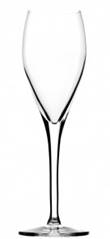
A champagne is classically poured in a flute. During the last ten years, the design of the flute moved from a very thin form towards a larger glass in order to enhance the aromas of champagne. For old vintages you could even serve your champagne in a white wine glass which will help you feel all the range of aromas the champagne has to offer.
4.Once you open a bottle how long will it keep? And what is the best way to keep it?
Once your bottle of champagne is open, you should drink it within the next 2 hours. You could use a special stopper for Champagne that will allow you to keep your bottle for the rest of the day in the fridge, but not more.
5.What is the difference between prosecco and champagne?
Prosecco and Champagne are very different. First the terroir is totally different and the grape varieties are also not the same. And another major point of difference is that the winemaking processes are totally different too. For champagne the second fermentation is done in the bottle during several years (at the minimum 4 years for Palmer) and for prosecco this second fermentation is done in pressure-vats in less than a month. Two very different worlds.
6.What’s the difference between vintage and non-vintage?
A vintage champagne is produced exclusively with the grapes coming from the crop of the year. A non-vintage champagne is a blend of several years – wines from the base harvest blended with reserve wines which enable us to obtain a consistent and specific taste of each cuvee. At Palmer for our Brut Reserve, the reserve wines represent 30% in each blend. These reserve wines give the backbone to the cuvee.
7.When you buy a bottle and don’t open it, how long will it keep?
Champagne is elaborated to be drunk within the year after buying. The work of aging champagne has been done by the House, in our cellar. When we release a cuvee of champagne on the market, it means that this wine has obtained its perfect level of evolution.
8.What’s the best way to store champagne? On its side like fine wine?
The best way to store champagne is indeed on its side like fine wine. But at the opposite of fine wine and due to the pressure in a bottle of champagne, to store a bottle of champagne in a standing position is less a problem even if it is not the best way.
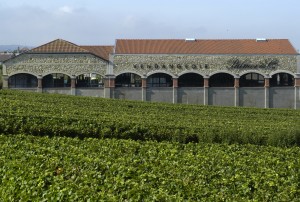
About Champagne Palmer: In 1947, Champagne Palmer was founded by a group of seven growers in Avize, France who came together to work toward one common goal: to produce wines that would be the best possible expression of the terroir of the Montagne de Reims. The founders’ prime location within the Montagne de Reims and their strict adherence to traditional production methods helped them produce beautiful wines that quickly became a standard of quality in Champagne. With its reputation for consistently high-quality products, Champagne Palmer grew rapidly, and now encompasses over 300 growers. Prices range from $52 for a Brut Reserve( 50% Chardonnay, 40% Pinot Noir, 10% Pinot Meunier) 4 years of aging on lees and 6 months of aging after disgorgement (most other major houses age for only 2-3 years) to $140 for the Amazone de Palmer ( 50% Chardonnay, 50% Pinot Noir Reserve), aged for 12 years on lees and hand riddled according to traditional methods.


2 Responses
there are only two things you really need to know about bubbly:
:
never buy anything but the most expensive…EVER EVER EVER
get somebody else to pick up the tab
OH yes, I forgot to tell you …never DRINK anything but the most epensive….
ever ever ever
What an interesting post. Thanks for the info on the vintage years!
I love the information that you provide on a regular basis. You’re my go-to guide for what’s interesting and new in Miami.
Warmly,
Natalie